
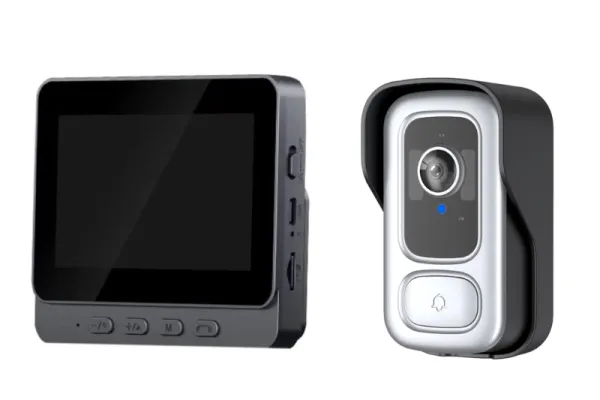
Smart Doorbell: The Complete Guide to Connected Home Entry Security
Smart Doorbell: The Complete Guide to Connected Home Entry Security
A smart doorbell does far more than ring when someone presses a button. It combines a camera, motion sensor, microphone, and speaker into a single device that connects to your home network, letting you see, hear, and speak to anyone at your front door from anywhere in the world. This guide explains how smart doorbells work, what features matter most, and how to choose the right one for your home.
At Yuaoheng Electronics, we have been designing and manufacturing smart doorbells for over a decade. Our product range covers battery-powered and wired models, with options for facial recognition, cloud storage, indoor screens, and two-way audio. Whether you are a homeowner upgrading your entry security or a brand looking for a private-label product, our product catalog has a model for every need. Learn more about our company and explore our OEM/ODM services for custom solutions.
What Is a Smart Doorbell?
A smart doorbell replaces your traditional doorbell button with a connected device that integrates a camera, microphone, speaker, and motion sensor. When a visitor presses the button or steps into the detection zone, the doorbell sends an instant notification to your smartphone. You can then open the companion app to view a live video feed, speak to the visitor through two-way audio, and even record the interaction for later review.
Most smart doorbells connect to your home Wi-Fi network and pair with a dedicated mobile app available for iOS and Android. Power options vary by model: battery-powered units offer easy DIY installation without existing wiring, while wired models draw continuous power from your existing doorbell transformer for always-on operation. This flexibility means a smart doorbell fits almost any home, from a rented apartment to a multi-story villa.
Our S19 smart doorbell is one of our most popular models, featuring high-definition video, infrared night vision, and two-way talk in a weather-resistant housing. For buyers who want a wider field of view, the S25 adds a broader lens while keeping installation simple.
Key Features of a Smart Doorbell
Not all smart doorbells are built the same. The features that matter most are the ones that directly affect security and daily usability. The table below summarizes the key features to check when comparing models.
| Feature | Why It Matters | What to Look For |
|---|---|---|
| Video Resolution | Clear footage lets you identify faces and packages | 1080p or higher resolution |
| Night Vision | Most doorbell events happen outside daytime hours | Infrared LEDs with 5-10 meter range |
| Motion Detection | Alerts you to visitors before they ring | Adjustable PIR sensitivity and zone settings |
| Two-Way Audio | Lets you talk to couriers, visitors, and strangers | Built-in mic and speaker with noise suppression |
| Weather Resistance | Doorbells live outdoors in rain, heat, and cold | IP65-rated or sealed housing |
| Power Source | Determines installation difficulty and reliability | Rechargeable battery or hardwired options |
| Cloud Storage | Saves video clips for evidence and review | Subscription or free rolling storage |
Smart Doorbell vs Traditional Doorbell
A traditional doorbell does one thing: it makes a sound when someone presses the button. A smart doorbell adds video, audio, motion sensing, remote access, and recording to that basic function. The comparison below highlights the differences.
| Capability | Smart Doorbell | Traditional Doorbell |
|---|---|---|
| Video feed | Live and recorded video via app | No video |
| Remote access | See and talk from anywhere | Only works when home |
| Motion alerts | Push notification on detection | No motion sensing |
| Two-way audio | Speak to visitors remotely | Audio only when at door |
| Recording | Cloud or local storage | No recording |
Battery-Powered vs Wired Smart Doorbells
One of the first decisions you will make is whether to choose a battery-powered or a wired smart doorbell. Each has its strengths, and the right choice depends on your home's wiring and your installation preferences.
Battery-powered models are perfect for renters and homes without existing doorbell wiring. They install in minutes with a few screws and typically run for two to six months on a single charge. Wired models connect to your existing doorbell transformer, providing continuous power so you never need to recharge. They are ideal for homeowners who want always-on recording and have compatible wiring already in place.
How to Choose the Right Smart Doorbell
Consider these factors when selecting a smart doorbell for your home or business:
1. Home type: Apartments benefit from battery-powered models with cloud storage, while villas may need wired models with larger fields of view.
2. Power availability: Check whether your existing doorbell wiring is compatible. If not, a battery model is the way to go.
3. Wi-Fi strength: The doorbell needs a stable connection at your front door. Consider a model with 2.4GHz support for better range.
4. Storage preference: Cloud storage offers off-site backup and easy sharing, while local storage (via SD card) avoids subscription fees.
5. Smart home integration: If you use Alexa, Google Assistant, or Tuya, look for a doorbell that supports your ecosystem.
6. Indoor screen: Some models pair with an indoor monitor, so you can see who is at the door without reaching for your phone.
Smart Doorbell Applications
A smart doorbell adds value in many settings beyond the standard home entrance:
For apartments, a battery-powered smart doorbell provides security without permanent wiring changes. For villas, a wired model with an indoor screen offers a complete entry management system. Businesses use smart doorbells to monitor deliveries and control access at side entrances. Property managers install them across rental units to improve tenant safety. Elderly care families use two-way audio to check on loved ones without opening the door. Each application benefits from the same core features: reliable motion detection, clear video, and instant remote access.
Frequently Asked Questions
Do I need a subscription to use a smart doorbell?
No. Most smart doorbells work without a subscription for live viewing and basic alerts. Cloud storage for recorded clips typically requires a subscription, but many models also support local storage via a microSD card, which is free. Check our warranty and support page for details on what each model includes.
Can I install a smart doorbell myself?
Yes. Battery-powered models are designed for DIY installation and typically take 15 to 30 minutes with basic tools. Wired models require connecting to your existing doorbell transformer, which may take longer if you are not familiar with low-voltage wiring. Our S8 model and other battery options come with mounting hardware and step-by-step instructions.
Will a smart doorbell work if my Wi-Fi goes down?
The doorbell button will still ring the indoor chime, and most models continue recording to a local SD card. However, remote notifications and live video streaming require an active Wi-Fi connection. Once your network is restored, the app reconnects automatically.
Can a smart doorbell see in the dark?
Yes. Nearly all modern smart doorbells include infrared night vision LEDs that illuminate the area in front of the camera, producing clear black-and-white footage in complete darkness. Some premium models also include a spotlight for full-color night recording.
Ready to upgrade your front door with a smart doorbell? Our team at Yuaoheng Electronics can help you find or customize the perfect model for your home or brand. We offer full OEM/ODM services and stand behind every product with comprehensive warranty support. Contact us today to discuss your requirements and request a quote.